Nigeria’s public healthcare system is under increasing pressure. Hospitals are crowded, healthcare workers are overstretched, and millions of Nigerians still struggle to access timely, affordable, and quality care. In many communities, especially rural and underserved areas, healthcare access remains inconsistent, delayed, or completely out of reach. At the same time, the burden of chronic diseases is rising, out-of-pocket healthcare costs remain high, and many patients still wait until conditions become severe before seeking medical attention.
This is the context in which digital health has become more important than ever.
Digital health is not just about apps, online consultations, or modern technology for the sake of innovation. Its real value lies in how it can improve access, reduce inefficiencies, strengthen preventive care, and support the long-term transformation of healthcare systems. In a country like Nigeria, where gaps in public healthcare are both structural and widespread, digital health has the potential to become one of the most practical tools for improving how care is delivered.
Public healthcare in Nigeria often struggles with fragmentation. A patient may consult at one hospital, run lab tests somewhere else, get prescribed drugs at another facility, and still have no clear continuity of care. In many cases, medical records are still paper-based, referrals are inconsistent, and follow-up care is weak. This makes the healthcare experience harder not just for patients, but also for doctors, nurses, and administrators trying to deliver care within already stretched systems.
Digital health helps solve this by creating better coordination. With the right systems in place, patient records can be stored and accessed more efficiently, consultations can happen remotely, prescriptions can be managed digitally, and follow-up care can become more structured. Instead of relying only on physical presence, healthcare becomes more connected, more trackable, and more responsive.
This is part of the broader value proposition that platforms like TrikaHealth bring into the Nigerian health space.
TrikaHealth sits within this shift toward smarter, more accessible healthcare delivery. As a digital healthcare platform, it supports remote consultations, preventive care, health data management, and a more connected patient journey. Rather than treating healthcare as something that only happens inside a hospital building, TrikaHealth reflects a model where care can extend into daily life, into homes, into workplaces, and into communities that may otherwise face barriers to access.
That shift matters because public healthcare systems do not only need more facilities. They need better ways to use existing resources. They need ways to reduce unnecessary congestion in hospitals, strengthen primary care delivery, and help people get medical advice before small problems become major emergencies.
Telemedicine is one of the clearest examples of this. In the Nigerian context, telemedicine should not be viewed narrowly as a video call with a doctor. Its broader value is that it allows healthcare systems to expand reach without immediately expanding physical infrastructure. A patient with recurring headaches, mild symptoms, medication questions, or chronic condition follow-up may not always need to sit for hours in a crowded hospital waiting room. In many cases, that patient needs timely medical guidance, proper triage, and a clear next step.
This is where digital platforms like TrikaHealth can play a strong role. By allowing people to consult licensed healthcare professionals remotely, TrikaHealth can help reduce avoidable hospital visits, improve early access to care, and support better continuity for patients managing ongoing conditions such as hypertension or diabetes. That is not just a convenience benefit. It is a system-level benefit.
If more people can get early advice, more minor issues can be managed before they worsen. If more follow-up care can happen consistently, fewer chronic conditions will spiral into emergencies. If public hospitals can redirect non-critical consultations through digital channels, they can focus more attention on urgent and complex cases.
The future of public healthcare in Nigeria will depend heavily on how well the country strengthens primary healthcare. This is where digital health has its strongest practical use. A better primary healthcare system is not just one with more clinics. It is one with stronger patient tracking, better record management, easier referrals, smarter monitoring, and more consistent communication between patients and providers.
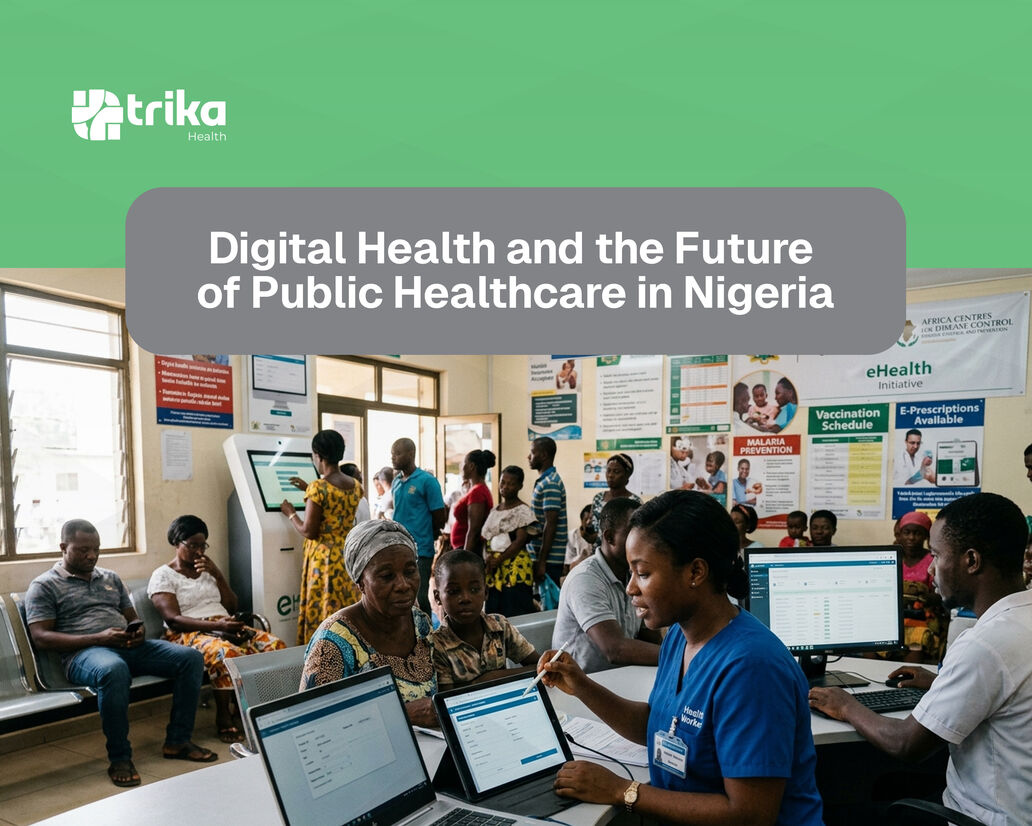
Digital tools can support all of this. They can help manage appointments, maintain patient records, enable remote follow-ups, support medication adherence, and improve access to health education. For governments and healthcare administrators, they can also create stronger reporting systems and better visibility into what is happening across facilities and regions.
This matters for public policy too.
Nigeria’s future healthcare challenges will not be solved by treatment alone. They will be solved by earlier detection, better prevention, stronger coordination, and more efficient systems. Digital health supports all four. It helps move healthcare away from being purely reactive and toward becoming more preventive and more structured.
That is why platforms like TrikaHealth should not be seen only as consumer-facing apps. Their deeper relevance lies in how they can fit into wider healthcare delivery systems — supporting individuals, providers, institutions, and even public-sector healthcare goals. In this sense, TrikaHealth is not only part of the digital health conversation; it is part of what the practical future of healthcare delivery in Nigeria could look like.
Another major issue in Nigeria’s healthcare system is trust. For digital health to scale meaningfully, people must trust the platforms they use. They must believe that their consultations are secure, their records are protected, and their care is being handled responsibly. This is especially important in healthcare, where personal and medical data are highly sensitive.
Trust will determine adoption just as much as convenience will. The digital health companies that will matter most in the long run will be those that not only improve access, but also build confidence — confidence among patients, healthcare professionals, institutions, and government stakeholders. This is part of why strong compliance, data protection, and reliable service design matter so much in healthcare technology.
The future of public healthcare in Nigeria will most likely be hybrid. Physical hospitals, primary health centres, labs, pharmacies, doctors, and nurses will remain essential. But increasingly, the systems behind them will become digital. Appointment booking, triage, consultation support, prescriptions, referrals, records, follow-ups, and reporting will rely more on technology. The question is not whether this transition will happen. It is whether it will happen fast enough and well enough to improve outcomes for the people who need it most.
Nigeria does not need digital health as a branding exercise. It needs digital health as practical infrastructure.
That means platforms must do more than look modern. They must solve real problems. They must reduce friction. They must improve access. They must support preventive care. And they must fit into the realities of how healthcare actually works in the country.
This is the direction the sector must move in, and it is also the space where TrikaHealth has the opportunity to be relevant. By supporting remote consultations, improving care continuity, and contributing to a more connected healthcare experience, TrikaHealth aligns with the larger future that Nigeria’s public healthcare system needs.
Digital health will not solve every healthcare challenge in Nigeria. But it can help close some of the most important gaps — especially around access, coordination, efficiency, and prevention. And if platforms like TrikaHealth continue to build in ways that are practical, trustworthy, and aligned with public health realities, then digital health will not just be part of the future of healthcare in Nigeria.
It will help shape it.